From probabilities to events#
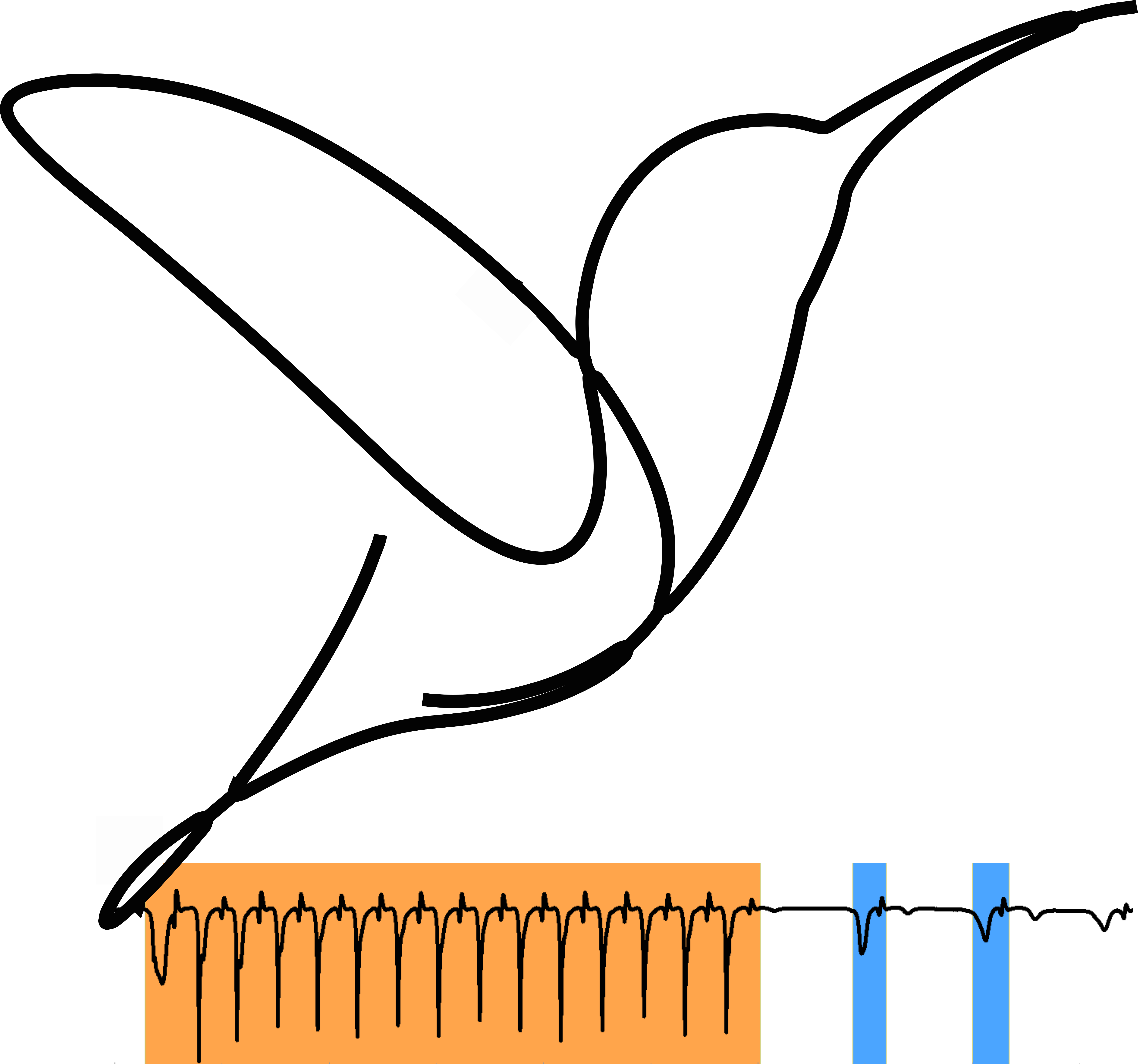
A point-event model never outputs an event. For every class it outputs a curve: the per-frame probability that the class’s event is here, over the whole trial. E2E-Spot gets it from one softmax per frame across the classes and background; the LightGBM model from a per-class classifier smoothed with its tolerance kernel. Turning a curve into a label is a rule, and the rule rests on one assumption about your trials. This page is that rule.
One event per class per trial#
The trial is the unit a model reads, and by default each class happens at most once in it. The prediction is the tallest interior peak of the class’s curve, with no threshold: the best candidate wins, however low. A threshold would have to be calibrated per class and per model before you could see a single prediction; sorting the review grids by confidence does the same job with the picture in view.
The assumption is enforced where it can be: materialise() refuses a trial
labelled twice for a class, so a recording in which the event repeats is cut
into trials at the alignment (Trial windows) or spotted with
the cap raised (below). It is also what gives the confidence its meaning: a
second peak in the curve is doubt about when, not a second event, and
ratio reads it that way. With one event per class the order of
labels.classes is the order the events happen in, and
infer.flag_out_of_order sets every event of a trial that breaks it to
confidence 0.
When the class is absent#
Every trial is assumed to hold the event, so a curve that is nearly flat
still has a tallest sample. Below infer.min_peak (default 0.05) the
class is absent from the trial and no label is written. The floor is set
deliberately low, for three reasons:
a false positive costs one
Backspacein frame-by-frame review; a missed event is invisible, and a missing label cannot be reviewed;a curve that low scores a confidence near
0anyway, so it lands on the first screens of a grid sorted lowest first;the model’s own scores decide, not a number chosen before seeing them.
Raise it for a class that is often absent, once the histogram shows where
the absent trials sit; set it to 0 to write every curve. The LightGBM
dialog’s Min confidence does the same for that model and is near 0 by
default.
Every other curve on which nothing was found is written at confidence 0
and flagged: one with no interior peak, or higher at the trial’s edge than
at any peak inside it, is the model saying maybe after the end, which is
worth a look rather than a deletion.
Several events per trial#
infer.max_events_per_trial lifts the cap. Every interior peak at least
infer.min_event_gap_s from a taller one is then an event, tallest first,
up to the cap, and each is scored over its own stretch of the curve. Three
things follow:
a second peak is another event, not a rival, so
ratioand the rules built on it (product,custom) are refused: setinfer.confidencetofocusorpeak;the model now returns spurious peaks beside real ones, so Flag confidence below has to be calibrated on the grid’s histogram before review rather than left at its default;
infer.flag_out_of_orderis refused, since the order between classes is undefined.
Prefer cutting the trials when you can: the one-event rule needs no threshold at all.
Then the confidence#
What is written beside the event, why it is the curve’s shape rather than its height, and how to change the rule from the histogram, are on the confidence page.